
We use cookies to personalise content and ads, to provide social media features and to analyse our traffic. We also share information about your use of our site with our social media, advertising and analytics partners who may combine it with other information that you’ve provided to them or that they’ve collected from other web pages that is not governed by us.
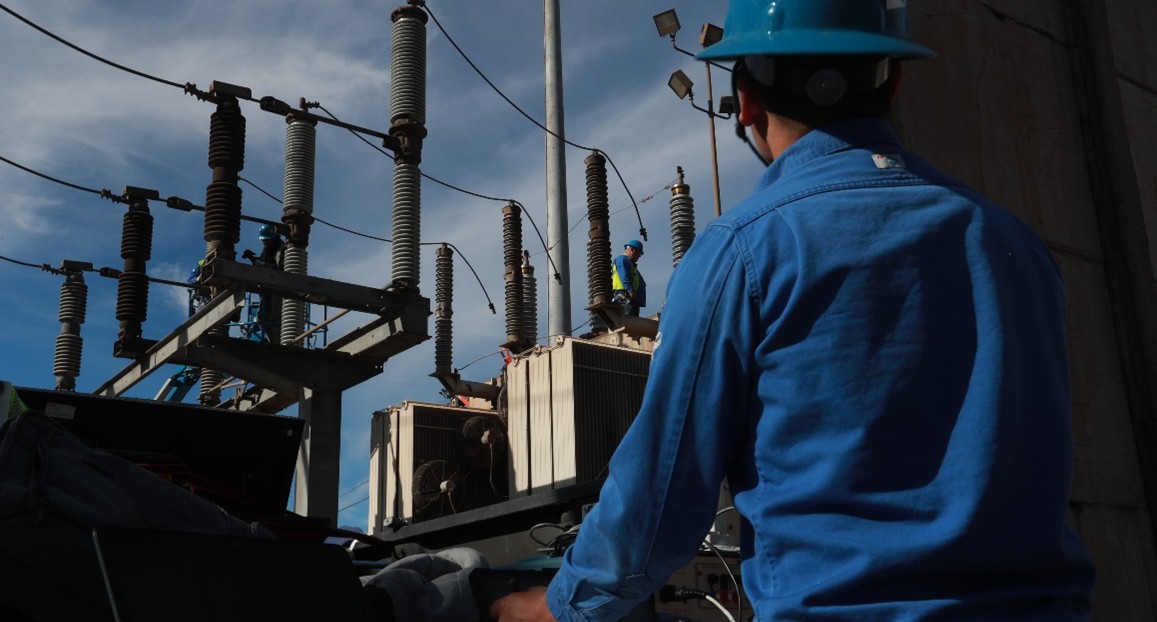
Transformers: Power Factor and Tip up Testing
Transformers: Power Factor and Tip up Testing
Most electrical equipment failures are the result of insulation deterioration. Power factor testing is the most effective and common way to detect insufficient electrical equipment insulation. This test enables technicians to detect equipment insulation problems without making an internal visual inspection. Technicians that can properly perform and evaluate the results of power factor tests can predict and prevent the failure of medium and high voltage transformers, circuit breakers, bushings, reclosers, switches, cables, lightning arrestors, liquid insulation, potheads, rotating machinery and voltage regulators. The intention of this training session is to guide the operator in the appropriate method of making capacitance, dissipation factor/power factor measurements on power apparatus and to assist in the interpretation of test results obtained. This training module is intended for new or experienced electricians and technicians that install, maintain, repair or troubleshoot electrical equipment.
Learning Objectives:
- Define dielectric material and describe how the dielectric constant of a material effects capacitance.
- Describe dielectric loss of an insulating system and how it may change with age.
- Explain the relationship between current, capacitance and dissipation/power factor.
- Explain loss angle and how it is calculated.
- Describe loss angle tests performed.
- Interpret test results.
Prerequisites:
Participants should have basic knowledge of basic AC reactive components and AC power.
TRAINING TYPE
E-LEARNING